
Etta Huang
Life is a constant process of observing and analyzing before drawing a conclusion.
Combining cross-domain experience in product planning, project management, systems analysis and software development, I solve problems end to end: from clarifying requirements and evaluating options to delivering the system.
I work AI-natively: AI agents carry out the workflow, while I own the technical decisions, process governance and final acceptance. With clear authorization boundaries, collaboration rules and verification steps, I raise development speed without trading away security, system quality or long-term maintainability.
Professional Summary
Cross-domain product planning, software development and AI-native engineering
Product planning and development across MMORPG, web and mobile games, covering game system design, combat and balance tuning, in-game economy, worldbuilding and narrative writing, UI/UX, release planning and live operations.
Beyond game design, I have also written MMORPG game code and built live-ops admin back offices and tools for game designers, and I know the full cycle from product planning and cross-team collaboration to release delivery.
Selected Titles
Built and integrated access-control systems, CRM/CMS, membership apps, e-commerce, digital learning platforms, internal enterprise systems and government information systems, including EIP, MRP, service request, finance, ETC-related and healthcare information systems.
Experienced in requirements analysis, system design, API integration, database design, legacy maintenance and modernization, and testing through production delivery, turning business needs and technical constraints into solutions that actually ship.
I apply AI-native development to real software projects: AI agents carry out the workflow, and multi-agent collaboration handles requirements analysis, coding, code review, testing and technical documentation.
Through side projects I keep exploring new technologies, agent collaboration patterns and automation, building cross-domain experience and refining my multi-agent workflow as the technology and real needs evolve.
Skills
Systems Analysis & Project Delivery
Software Development Stack
AI-Collaborative Development Stack
AI Development Workflow
Side Projects
Personal projects built with a multi-agent workflow. Some screens are mockups; all data is fictional.
How I manage an AI development team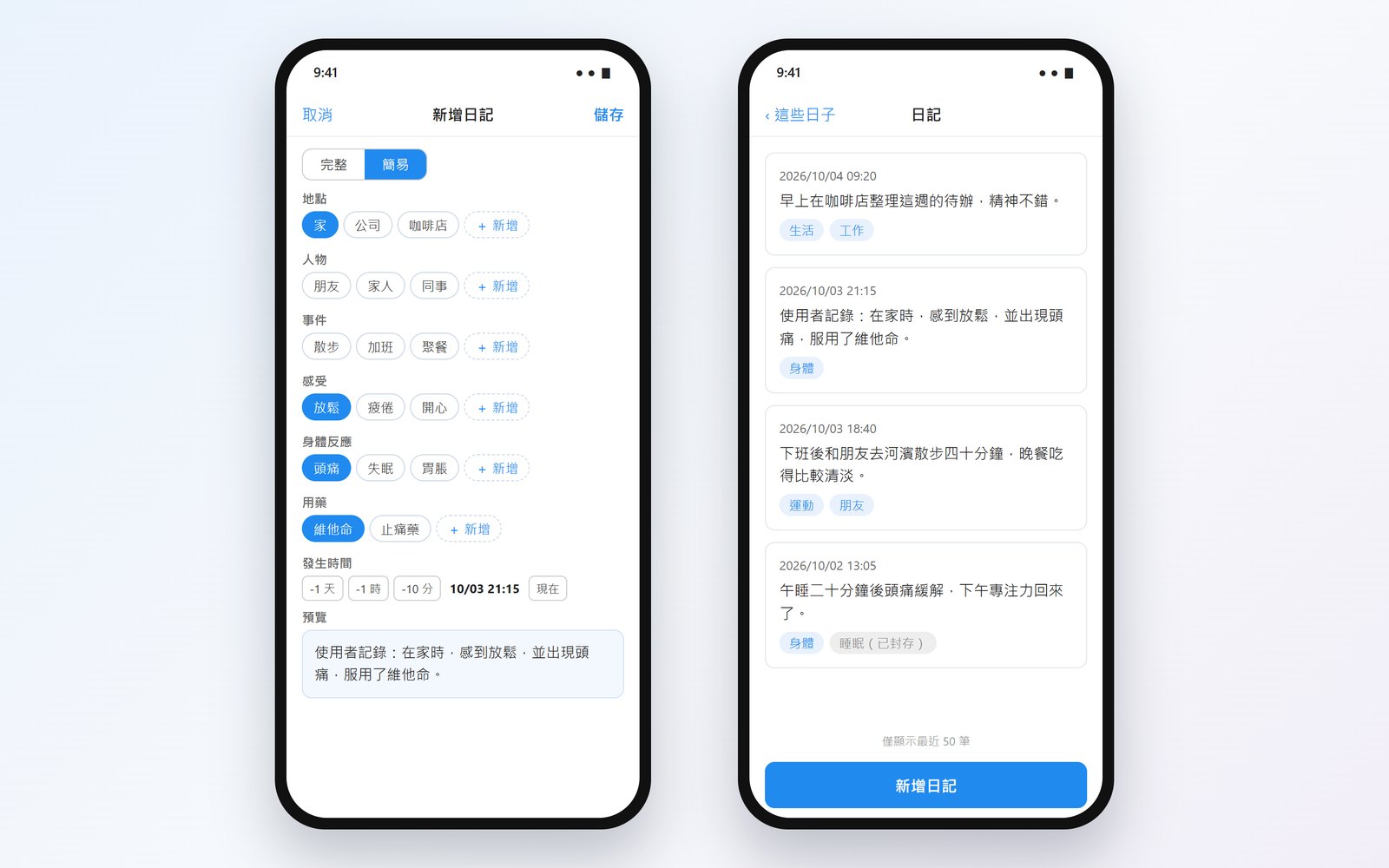
- A custom phrase library lets you tap together a journal entry in seconds
- Selected items form a readable sentence preview in real time; switch to full mode for free writing
- AI may never modify journal text: it can only write to derived tables, enforced by code boundaries and lint rules — not just by prompts
- SQLCipher-encrypted database, keys held in the system secure store, plus an app lock
- (Planned) Period review: pick a time range and let AI summarize the events, feelings and daily records in it
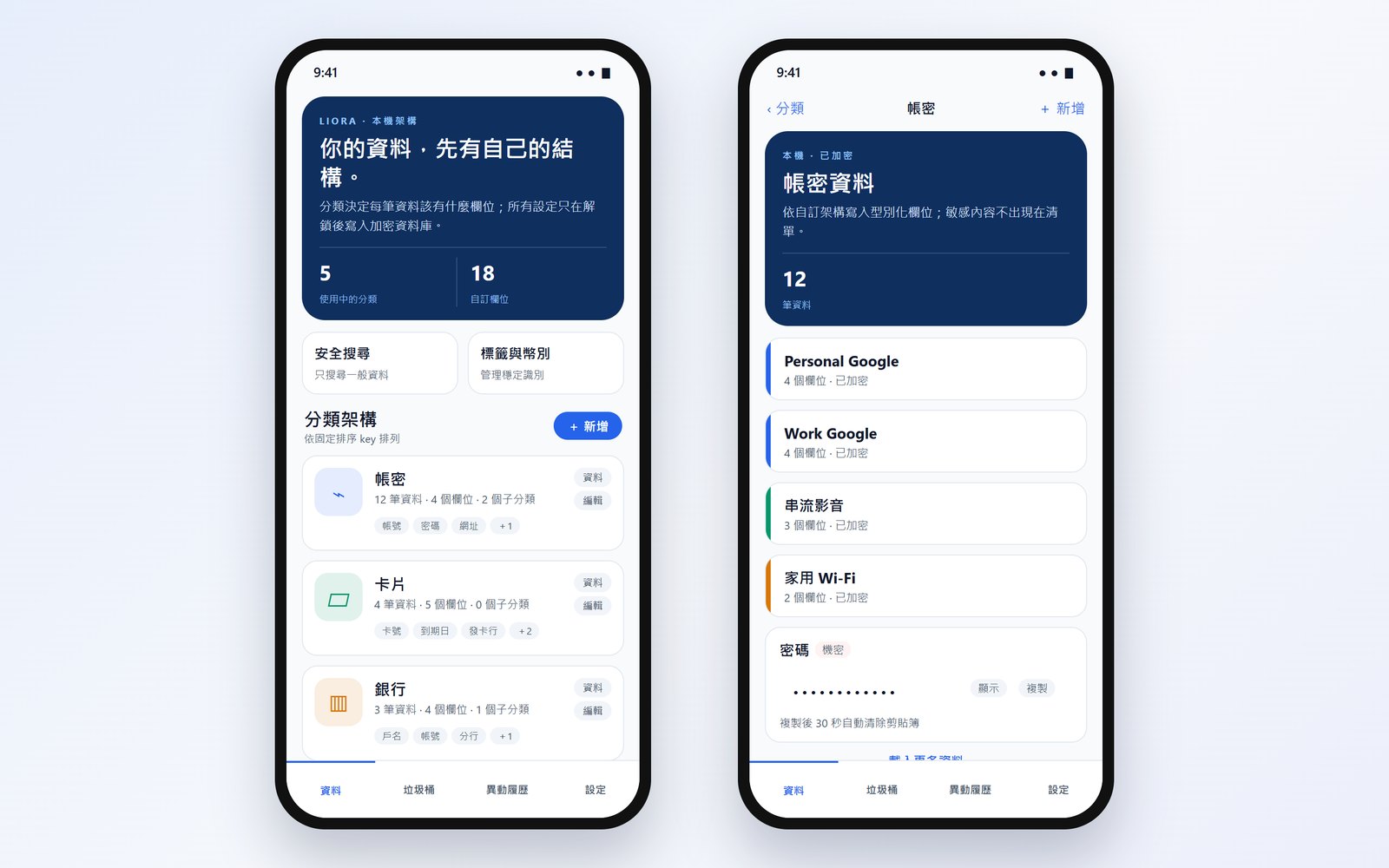
- Credentials, cards, bank details and other personal data stay encrypted on the device — no mandatory account or cloud sync
- Custom record formats: define the fields each kind of data needs instead of fitting the app's presets
- Fields are classified as normal, private or secret; passwords are always secret, and only normal fields are searchable
- Threat model first: the database key is decoupled from the app passcode, with a privacy screen, 30-second clipboard clearing and content-free notifications
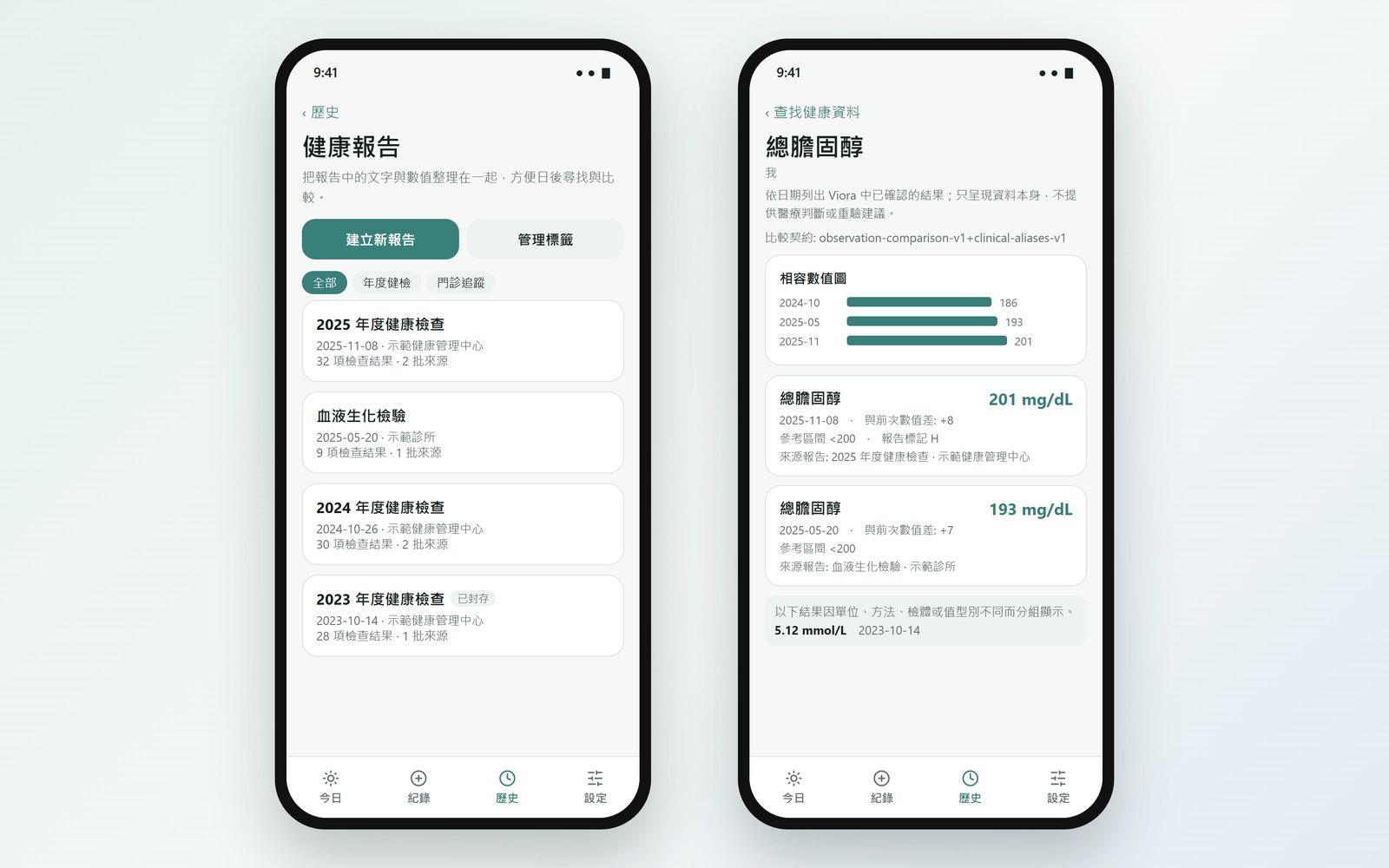
- Archive the text and values of checkups and blood tests; find them by report, provider, tag or test item
- Family health records: keep a separate profile for each family member so caregivers can find and compare reports when needed
- PDFs are read from the text layer first, with on-device OCR for missing pages; every extracted value must be checked by a person before saving — data only, no attachments
- Compare one test item across reports, grouped by unit, method and specimen so incompatible values never form a false trend; differences use exact decimals
- Medically neutral presentation: each result shows only the source report's reference range and flags, with no medical judgment; data stays on the device, encrypted with SQLCipher
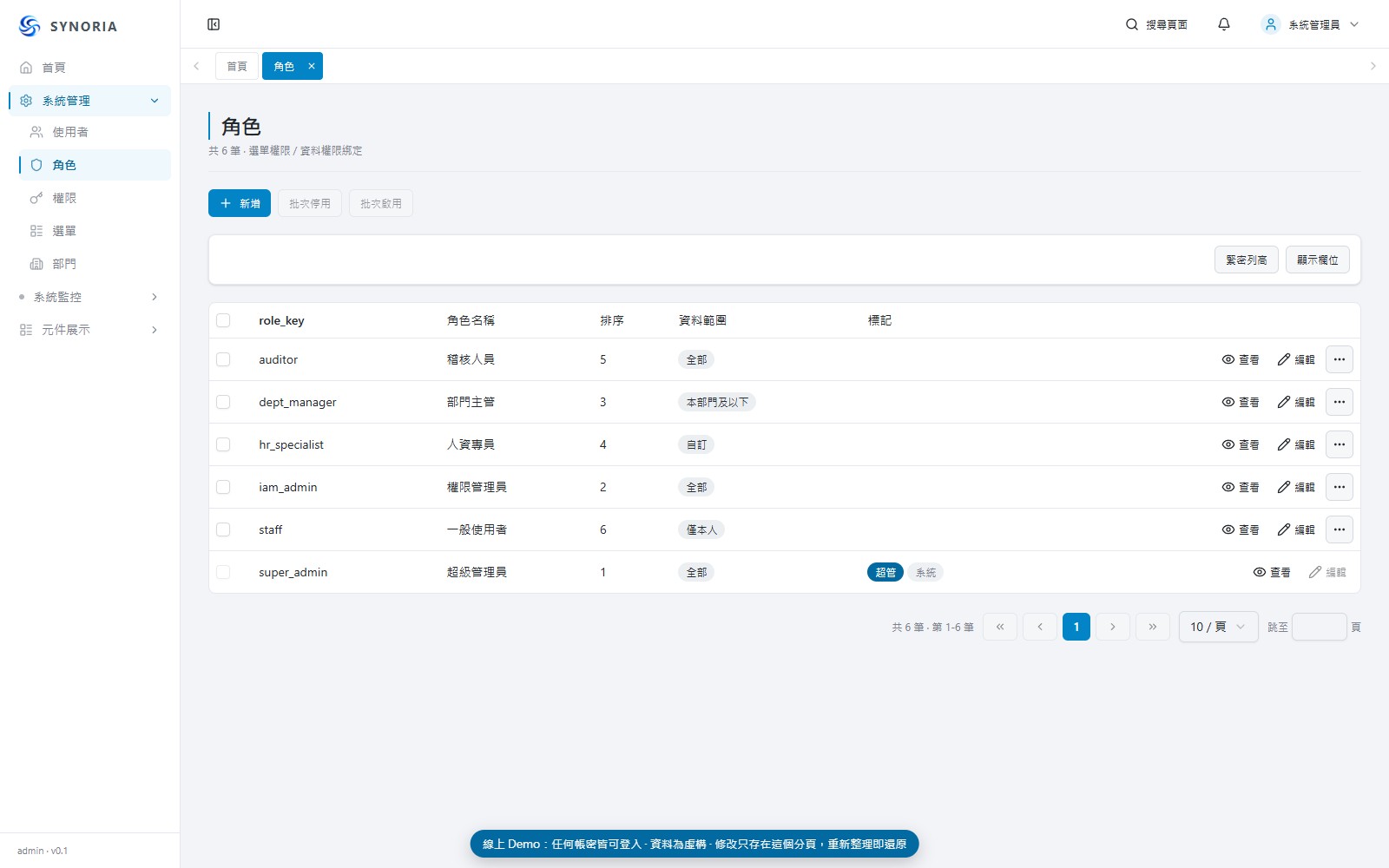
- RBAC roles plus data-scope control by department tree and role, enforced as row-level filtering in the data layer
- Authorization decisions come from a standalone Rust Policy Core over gRPC; any decision-service error or timeout fails closed
- Server-side sessions can be revoked immediately; audit logs tell policy denials apart from denials caused by decision-service failures
- One schema and migration set runs on PostgreSQL, MySQL and MSSQL, with each engine's differences handled explicitly
- At startup every protected route must declare a permission, or the server refuses to start
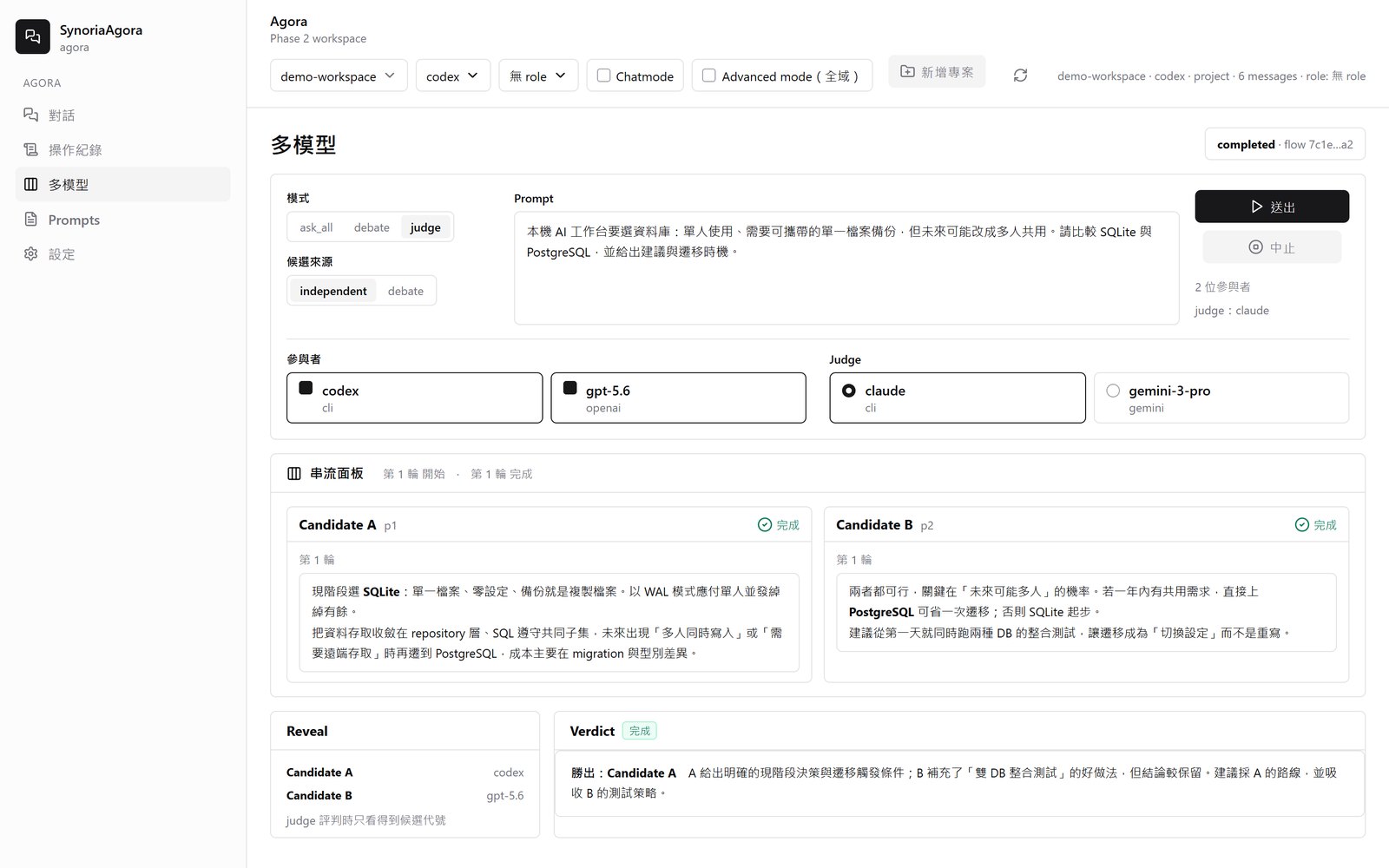
- One place for conversations with OpenAI-compatible APIs, Gemini, Anthropic and the Codex / Claude CLIs, with three multi-model flows: ask_all, debate and judge
- Blind judging: the judge only sees Candidate A / B, and the models are revealed after scoring to avoid brand bias
- Security model: CSRF and DNS-rebinding protection, CLIs always in a read-only sandbox, API keys encrypted with AES-GCM; dangerous actions need a one-time, time-limited confirmation token bound to the plan
- Cancellation reclaims the whole child-process tree via Windows Job Objects, and mutation testing confirms the tests really catch failures
- Can run as a SynoriaBase plugin, sharing its authentication, permissions and data-scope control
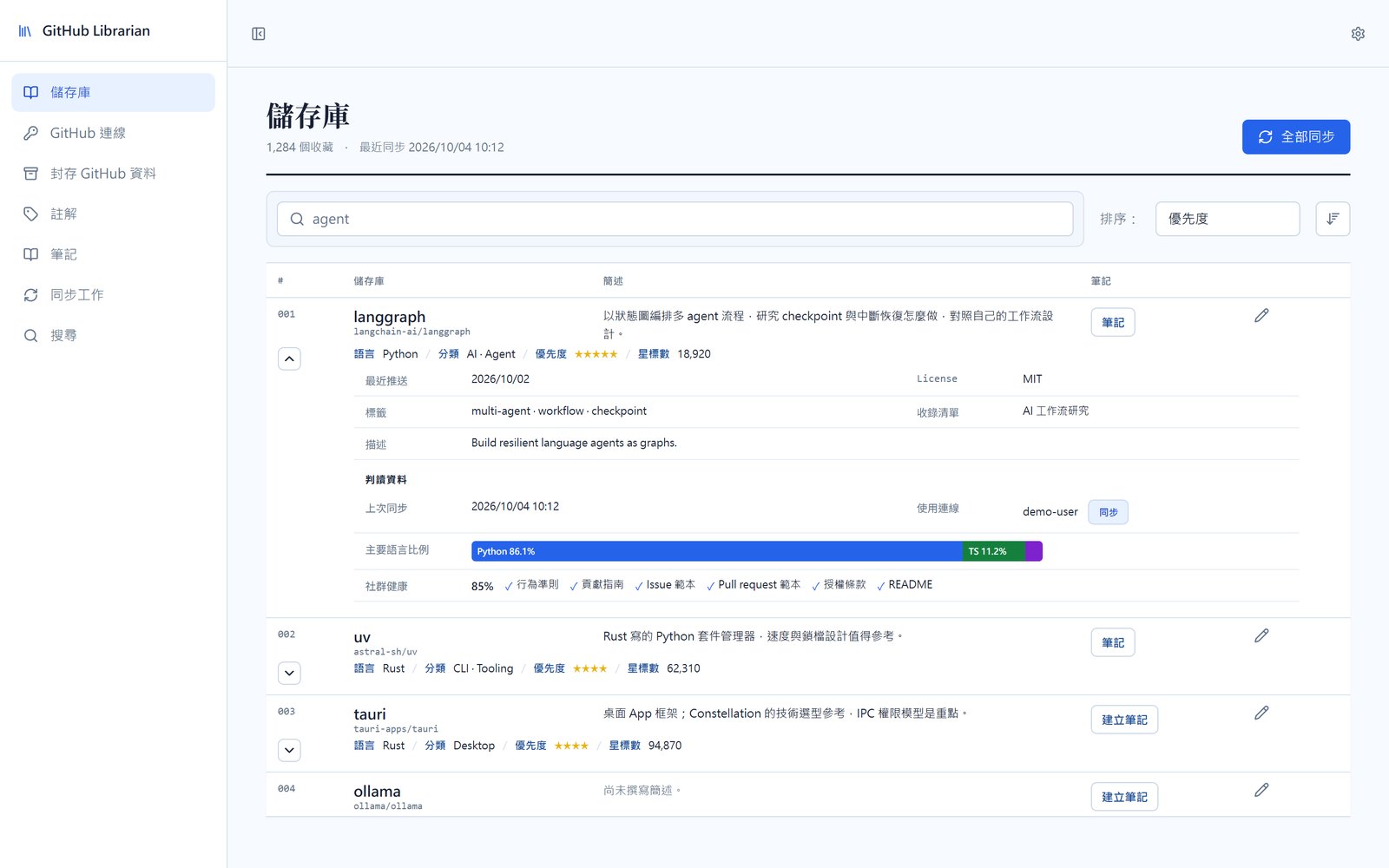
- Syncs GitHub stars locally and adds priority, categories, tags and Markdown research notes
- Supports multiple GitHub account connections, with each sync job bound to a specific account
- Three data layers (repo / annotations / notes): sync only overwrites the repo layer, so user annotations are never lost
- GitHub tokens live in a separate credential database and are never included in main-database backups
- Persistent job queue with de-duplication and double-trigger protection, bound to a specific account connection; OAuth via Device Flow
- Can run as a SynoriaBase plugin, sharing its authentication, permissions and data-scope control
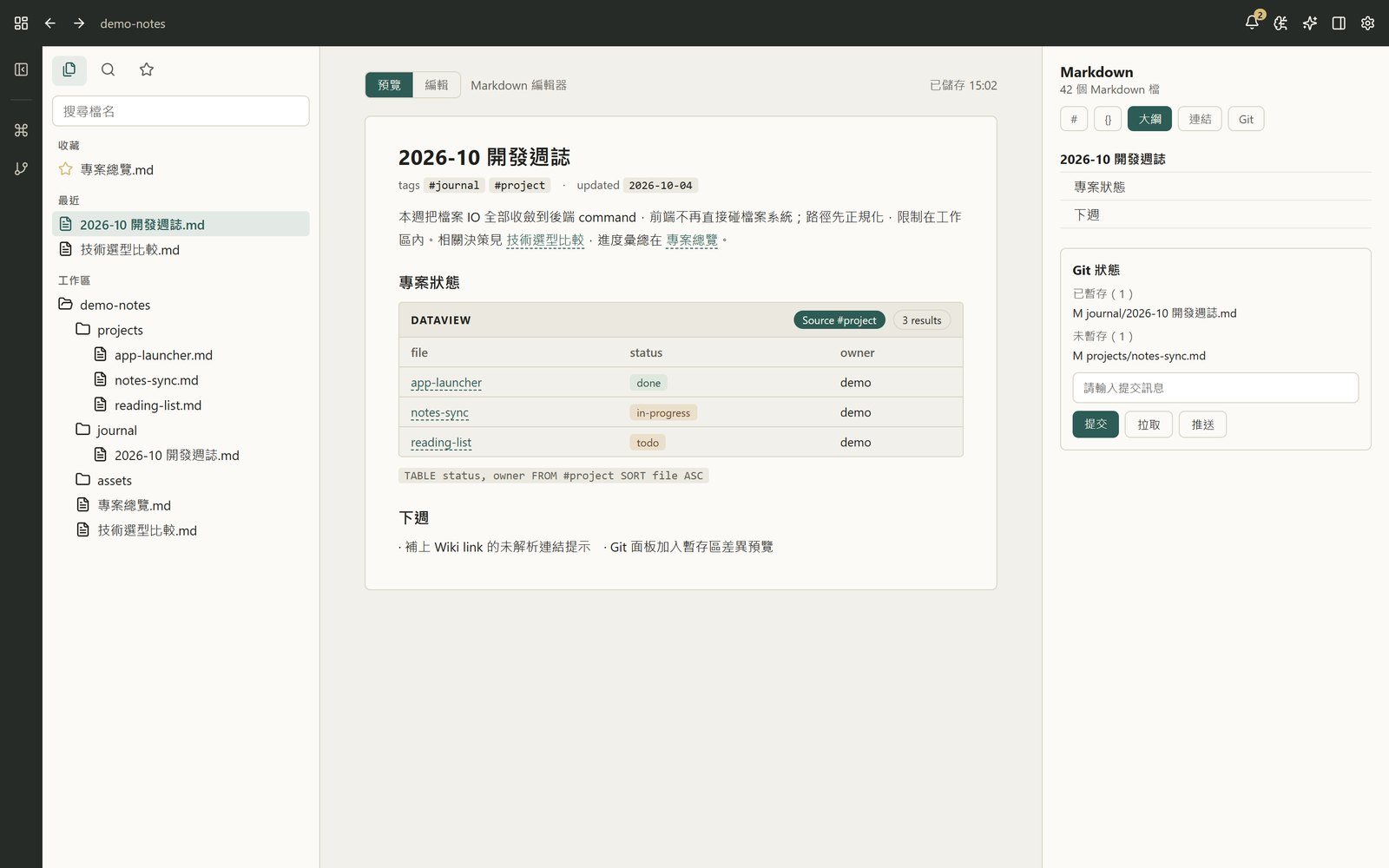
- A local-first desktop workbench built around folders and Markdown, bringing notes, documents and everyday web apps together
- All file access goes through backend commands; paths are normalized and confined to the workspace, and the frontend never touches the file system directly
- Dataview-style queries, wiki links, outline, Markdown linting and a Git stage / commit panel
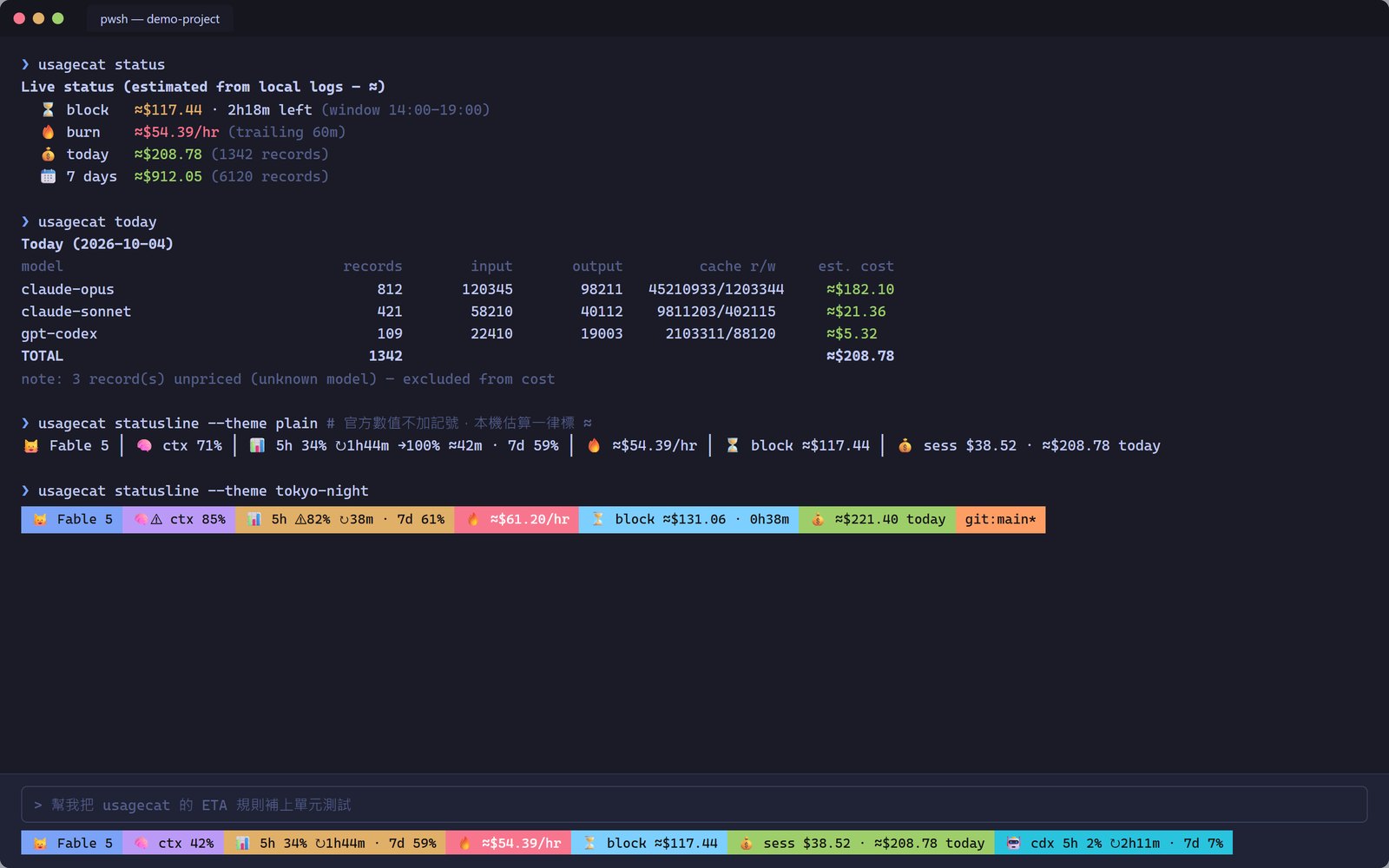
- One tool for Claude Code, Codex, Gemini and other AI CLIs, showing quota, burn rate and time-to-limit estimates in the statusline
- Official figures and local estimates are labeled separately (estimates always marked ≈); with too little data it shows nothing rather than a wrong number
- An observation pipeline organized by data source; three fallback sources for pricing, and no network calls on the statusline hot path
- Themes, optional segments and width-aware truncation; used daily and fully tested on WSL and Windows
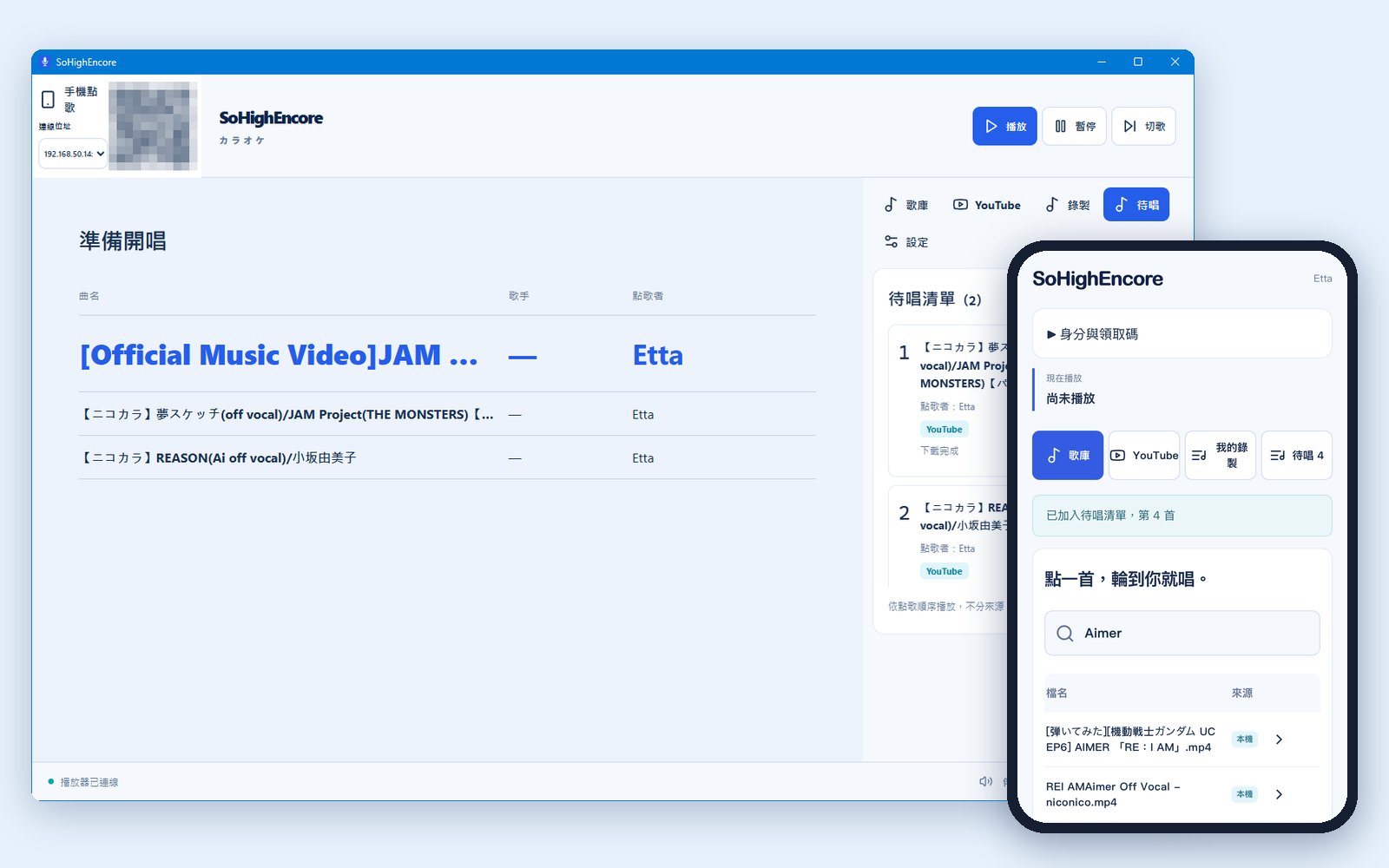
- Plays a local song library and YouTube videos on the computer; phones on the same LAN scan a QR code to join and request songs, all sharing one queue
- The queue is owned by a local Rust service; station, phone and player pages have separate permissions, the QR code carries no station admin key, and phones can't reorder the queue or control playback
- Each song can be recorded as vocals only, vocals with backing track, performance video, or not at all; vocal and backing tracks are kept separately, and phones can download only their own recordings via short-lived links
- Automatic recording-latency measurement: plays a low-volume test signal, records it back through the microphone and compares, taking the median of three runs and rejecting low-correlation or clipped results
- Live microphone monitoring and experimental feedback suppression; UI in Traditional Chinese, English and Japanese
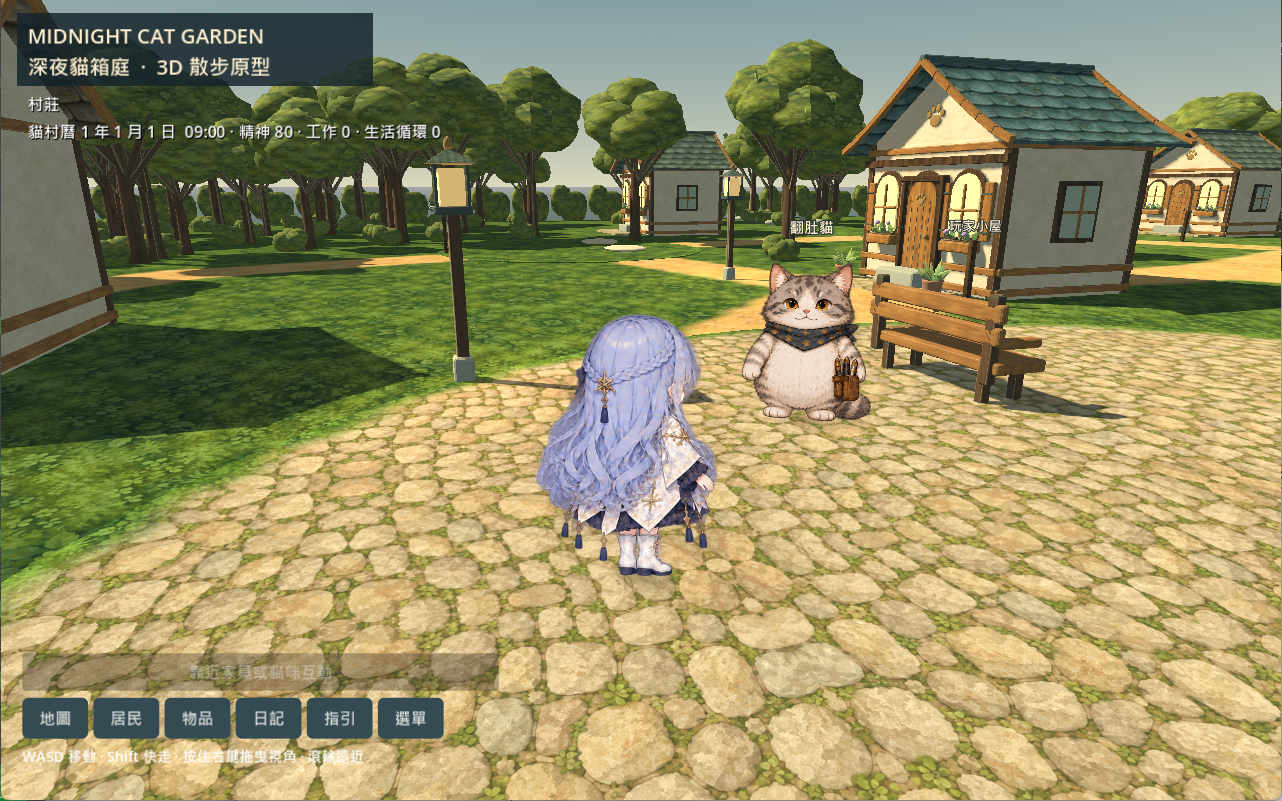
- A cozy exploration game about living in a village with cats
- 3D environments with 2D characters